
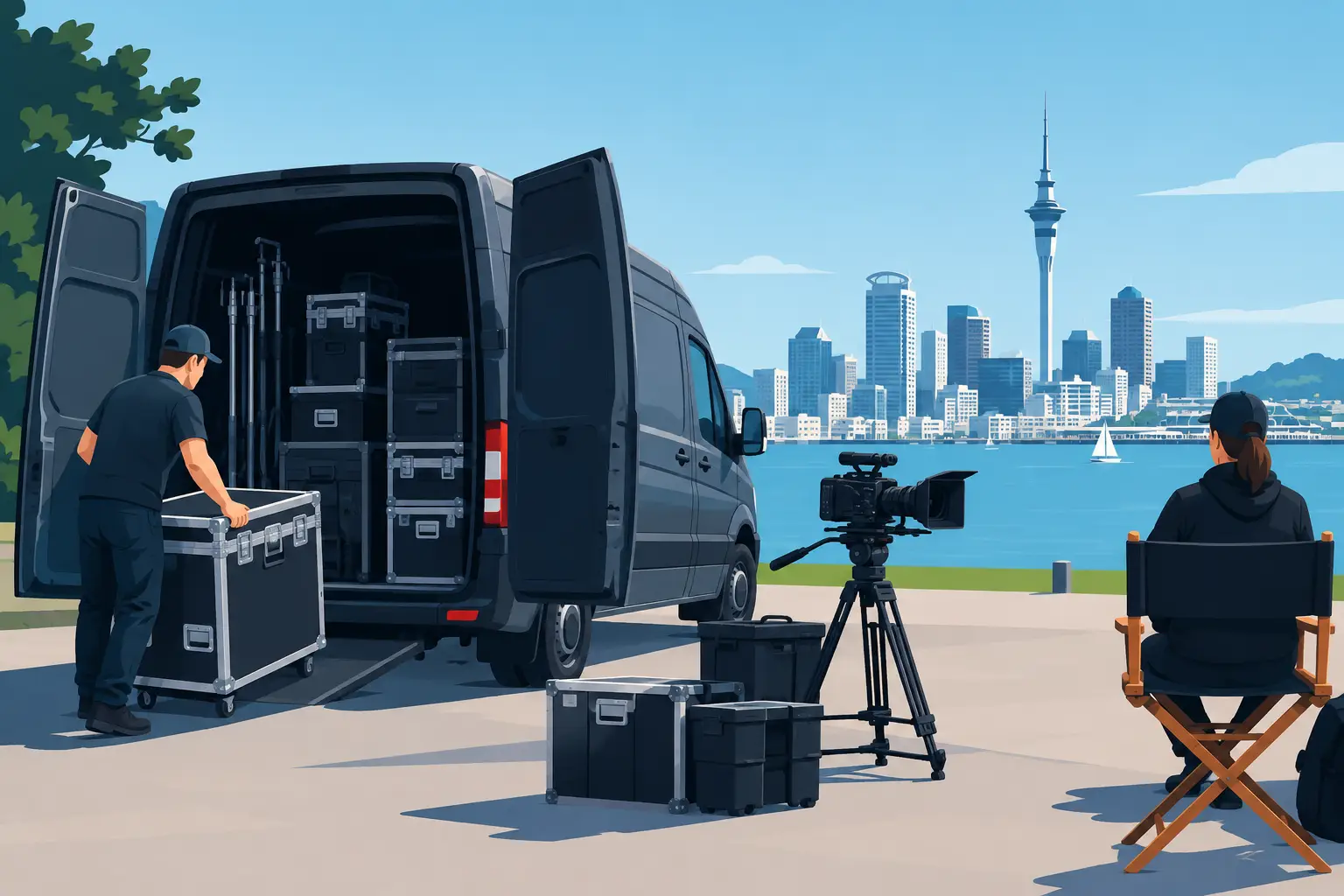
A 5.30am unit call does not allow much room for transport uncertainty. Film production transport Auckland crews can rely on must account for early starts, split locations, changing wrap times and people arriving with more than luggage. It means moving cast, producers, agency clients and crew in comfort, while keeping the day running to schedule.
For production managers and location teams, premium private transport is not simply a way of getting from hotel to set. It is a controlled part of the production plan. The right vehicle, driver and dispatch coordination can protect call times, preserve privacy and give key people a calm, prepared start to a demanding day.
Why film productions need a different transport standard
Auckland productions often work across several environments in one week, or even one day. A crew may begin at a waterfront hotel, travel to a studio in West Auckland, move to a city-centre location and finish with an evening shoot on the North Shore. Traffic conditions, parking restrictions, loading access and weather can all affect the plan.
Standard point-to-point transport rarely provides the level of control needed for this work. Production travel needs pre-booked vehicles, drivers who understand scheduled waiting, and an operator able to respond when a location change or revised call sheet alters the day. This is particularly valuable for visiting talent, senior executives, directors and clients who need a private, polished journey between the airport, accommodation and set.
There is also a practical distinction between crew movement and VIP movement. A large unit may need a people mover or minibus on a defined shuttle schedule, while a principal cast member may require an executive sedan with a dedicated chauffeur. Using vehicles that suit each group helps manage cost without compromising the experience where it matters most.
Film production transport in Auckland: planning before call time
The smoothest transport days are planned before the first vehicle arrives. A transport partner should receive the call times, pickup addresses, location details, passenger numbers and a clear contact for on-the-day changes. Where there are several vehicles, it also helps to confirm who is travelling in each car and whether anyone has specific privacy, access or luggage requirements.
Airport movements deserve particular attention. International arrivals can be affected by immigration queues, baggage delays and flight changes. A professional meet-and-greet service allows arriving cast, crew and guests to be welcomed in the terminal and escorted directly to their private vehicle. Flight-related waiting removes pressure from the passenger and avoids the uncertainty of arranging transport after landing.
For location work, a chauffeur should know the correct entrance, unit base address and preferred drop-off point before departure. That sounds simple, but it prevents unnecessary calls and delays at sites with restricted access. It also gives the production office one less moving part to manage.
Build sensible contingency into the schedule
A call sheet may show a precise pickup time, but production transport should be organised around the real conditions of the journey. Auckland’s motorway network can move quickly or slow significantly, especially during weekday peaks, major events and wet weather. Allowing appropriate travel time is more useful than promising an unrealistic journey duration.
Contingency should also cover wrap. If a crew finishes later than expected, the transport plan needs a clear process for extensions, standby vehicles or revised departure times. Some productions benefit from booking a chauffeur by the hour or for a full day, rather than arranging several individual journeys. It depends on how fixed the schedule is, how far apart locations are and how likely it is that the day will run over.
Choosing vehicles for cast, crew and clients
Vehicle selection should reflect passenger numbers, equipment requirements and the standard of travel expected. Premium executive sedans are well suited to one or two VIP passengers, producers or agency representatives. They offer quiet, private space for calls, preparation or a moment away from the pace of set life.
Mercedes-Benz V-Class people movers provide a refined option for small groups, cast parties and executive teams travelling together. With generous seating and luggage capacity, they are particularly useful for hotel-to-set transfers, airport arrivals and full-day location work. Travelling together can also keep a department or client group aligned without requiring a larger coach.
For larger groups, Mercedes Sprinter minibuses bring comfort and capacity to crew shuttles, conference-style movements and airport transfers. The right configuration can reduce the number of vehicles at a location, simplify timing and help manage parking limitations. However, a minibus is not always the best answer: a smaller fleet of people movers may be more practical where pickups are spread across several hotels or access roads are tight.
Onboard WiFi is a worthwhile consideration for executives and production personnel who need to stay connected between locations. It supports last-minute schedule reviews, emails and calls without asking passengers to rely on mobile coverage alone. Private transport should feel considered, not ornamental. Comfort, presentation and connectivity all serve the working day.
The value of professional chauffeurs on production days
An experienced chauffeur brings more than driving capability. They provide discretion, local route knowledge, professional presentation and a calm point of contact for passengers. For high-profile talent and overseas guests, this is an essential part of the arrival experience.
Professional chauffeurs also understand that productions work to a different rhythm. They may be asked to wait nearby, adjust a pickup point because of road closures, or return to a hotel after an unexpected schedule change. Clear communication matters, but so does judgement. A driver who arrives early, monitors the agreed plan and presents the vehicle immaculately makes the transport side of the day feel properly managed.
Privacy is equally important. Cast, executives and clients should be able to travel without the interruptions or unpredictability associated with public or shared transport. Pre-booked private vehicles give productions a dependable environment for confidential conversations, personal downtime and focused work between locations.
Coordinated transport for complex schedules
The more passenger groups a production has, the more valuable central coordination becomes. A commercial shoot may involve airport pickups for an overseas director, daily hotel transfers for agency staff, separate movements for talent and a final transfer to a client dinner. A feature production may require crew shuttles, late-night returns and intercity travel for a regional location.
Rather than asking multiple individuals to arrange rides independently, production teams benefit from one clear transport plan. This can include named passenger lists, vehicle allocations, pickup windows and a single production contact. It creates visibility for the coordinator and a more consistent experience for every traveller.
Brightlane supports tailored film and production transport with a premium VIP fleet, including executive Mercedes-Benz vehicles, V-Class people movers and Sprinter minibuses. From airport meet-and-greet to full-day chauffeur hire, the focus is on on-time, reliable and comfortable travel for the people who keep a production moving.
When production travel goes beyond Auckland
Auckland is often the base, but the shoot may not stay there. Regional locations, recce days and client itineraries can require private travel to places such as Matamata, Rotorua, Waitomo or the Bay of Plenty. For longer journeys, comfort becomes even more significant. Passengers need room, reliable scheduling and a driver who can manage the route without turning the trip into another logistical concern.
A tailored itinerary is especially useful when production and hospitality overlap. A visiting client may need to attend a location recce, meet the team in Auckland and then travel to a dinner or accommodation outside the city. Keeping this travel under one professionally managed service maintains the same standard throughout.
What to confirm when booking production transport
A well-prepared booking avoids most on-the-day issues. Confirm the number of passengers, the amount of luggage, all pickup and drop-off points, flight details where relevant, and whether vehicles will be required to wait. Share the call sheet or a transport-specific schedule when possible, including the production contact who can authorise changes.
It is also sensible to discuss the required level of vehicle presentation. For a client-facing commercial, premium black vehicles and formally presented chauffeurs may be part of the brief. For a working crew shuttle, capacity, comfort and punctuality may take priority. Both deserve reliable service, but the vehicle plan should reflect the job rather than applying one solution to every movement.
The best production transport arrangement is one your team barely needs to think about once the day begins. With a clear schedule, suitable vehicles and professional chauffeurs in place, cast, crew and clients can arrive ready for the work ahead.