
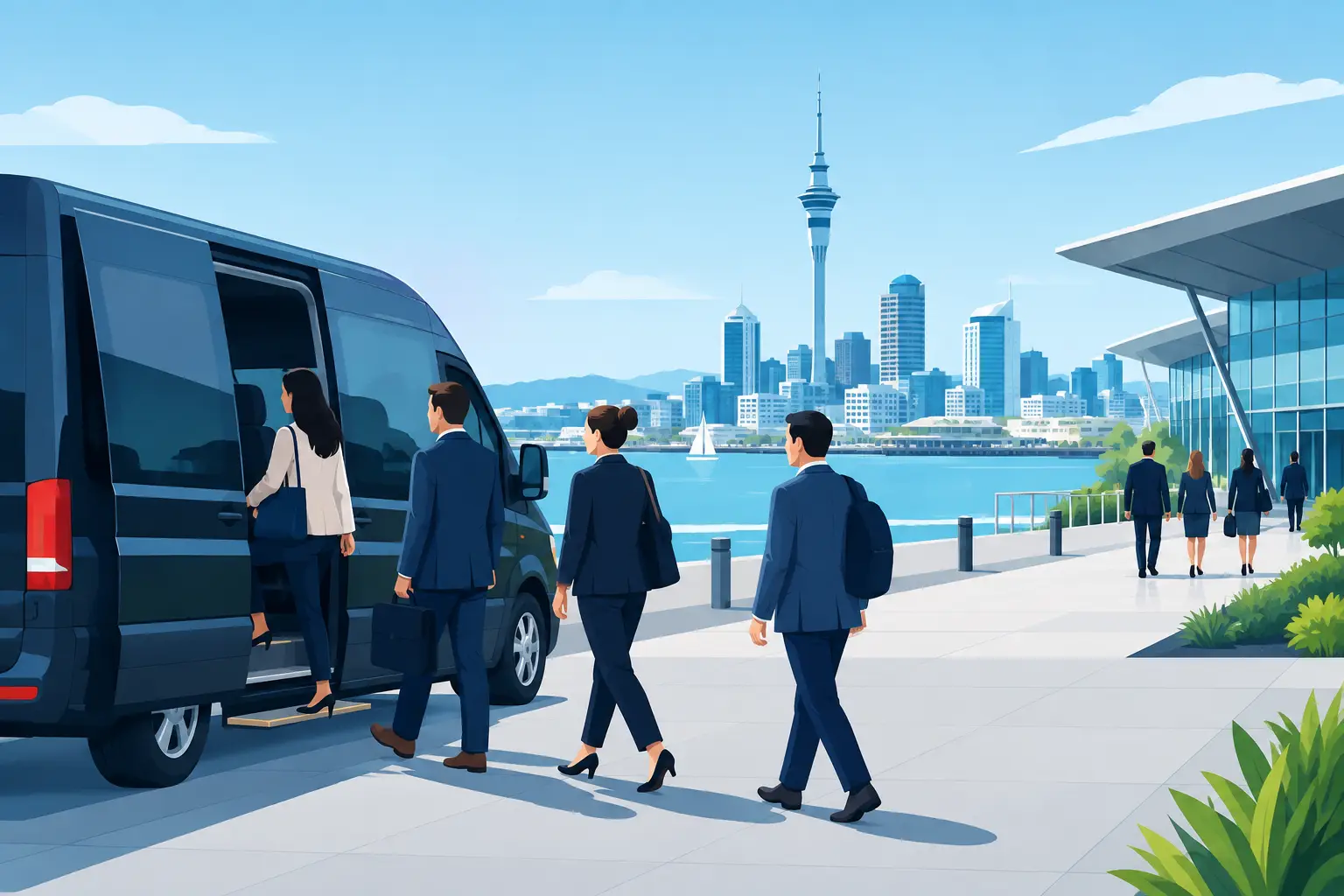
A conference schedule can look perfectly organised on paper and still unravel at the kerbside. A late airport arrival, a speaker sent to the wrong hotel or a full coach caught in city traffic can affect registrations, opening sessions and the experience delegates take away. Professional conference transport solutions Auckland organisers can rely on turn travel into a managed part of the event, rather than a last-minute concern.
For corporate meetings, incentive groups, industry conferences and VIP programmes, the right approach is private, pre-booked transport with clear ownership of every journey. It combines the appropriate vehicle, an experienced chauffeur, accurate flight and venue information, and a plan for what happens when timings change.
What conference transport needs to achieve
Conference transport is not simply about moving people between A and B. It needs to protect the event timetable while giving delegates a comfortable first impression of Auckland. For international guests, senior executives and government visitors, it should also provide privacy, discretion and confidence from the moment they arrive.
The priorities usually fall into three areas: punctual arrivals, simple communication and suitable capacity. An individual keynote speaker may require a discreet executive sedan and airport Meet & Greet. A leadership team may prefer a Mercedes V-Class people mover so they can travel together. Larger delegate groups, meanwhile, need coordinated Mercedes Sprinter minibuses that match flight loads, hotel collection times and venue access restrictions.
The best transport plans account for the whole delegate journey. That includes Auckland Airport arrivals, transfers to city, waterfront or airport hotels, daily shuttles to the conference venue, evening functions, dinners and departure transfers. Treating each trip separately can create gaps in responsibility. Managing the programme as one operation makes it easier to keep people informed and on time.
Choosing conference transport solutions in Auckland
Auckland’s geography makes transport planning especially important. The airport is well south of the central city, while conference venues and premium hotels may be located across the CBD, Wynyard Quarter, Viaduct Harbour, Parnell, Newmarket or further afield. Travel times vary considerably with weekday peak traffic, major events, road works and weather.
Start by mapping journeys according to purpose, not just passenger numbers. Airport arrivals need flight monitoring, waiting arrangements and clear meeting instructions. Hotel-to-venue movements need defined collection points and a realistic loading window. Evening events may call for staggered return services, especially where delegates finish at different times.
Vehicle selection should follow the actual group profile. Sending an oversized vehicle for a small executive party can feel inefficient, but underestimating luggage after an international flight creates an equally poor experience. A premium fleet gives organisers the flexibility to match each movement to its purpose:
- Executive sedans suit VIPs, speakers and one-to-three passenger airport transfers.
- Mercedes V-Class vehicles provide generous space for small corporate teams, families and guests travelling with luggage.
- Mercedes Sprinter minibuses are well suited to delegate waves, event shuttles and larger private groups.
- Dedicated vehicles and chauffeurs can be retained for full-day programmes where timings may shift.
The right provider will advise on capacity based on passenger numbers, bags, event dress, mobility requirements and venue access. A group wearing formal evening attire, for example, benefits from more personal space than a standard commuter transfer might allow.
Build the plan around real arrival patterns
Auckland Airport schedules rarely deliver delegates in one neat group. International and domestic flights arrive across the day, and delayed flights can affect even the most carefully prepared itinerary. Rather than booking one broad airport run, create an arrival manifest that records flight numbers, passenger names, terminal, destination hotel, contact details and luggage requirements.
This allows chauffeurs and coordinators to manage each guest with care. Meet-and-greet service is particularly valuable for first-time visitors, VIPs and guests arriving after a long-haul flight. A professional chauffeur can meet the passenger at the agreed point, assist with luggage and escort them to a private vehicle, removing the uncertainty of finding a rank or shared shuttle.
For larger delegations, arrivals can be grouped into practical waves. There is a balance to strike here. Waiting too long for a fuller vehicle may frustrate tired travellers, while dispatching every passenger individually can increase cost and complicate the operation. The best choice depends on the event budget, guest profile and available flight windows.
Plan venue movements before the first guest lands
Hotel shuttles are often where conference organisers face the greatest pressure. Morning departures must allow enough time for lift queues, guest loading, traffic and security or registration procedures at the venue. A published pick-up time should not be the same as the session start time.
Site knowledge matters. Confirm where vehicles can stop, whether a loading zone must be booked, the maximum vehicle size permitted, and who will meet delegates at the venue. If a Sprinter minibus cannot wait outside the main entrance, guests need clear instructions before they leave the hotel. Small details prevent a premium transfer from becoming an avoidable delay.
For multi-day events, keep the same collection points and timing logic wherever possible. Familiarity reduces questions for delegates and makes it easier for event staff to spot anyone who has missed a departure. Onboard WiFi also gives travelling guests a useful window to check messages, review meeting notes or notify colleagues of their arrival.
Make VIP and speaker travel feel effortless
Keynote speakers, board members and hosted guests often have tighter schedules than the wider delegate group. Their transport should reflect that. A private chauffeur-driven vehicle allows for direct airport, hotel and venue movements without unnecessary stops, while also giving the guest a quiet space before an important appearance.
It is sensible to build contingency time around speakers rather than assuming the standard delegate shuttle will suit them. A delayed inbound flight, media commitment or last-minute rehearsal may require a different collection time. Retaining a dedicated chauffeur or arranging an on-call vehicle can be worthwhile where the person’s role is central to the programme.
Privacy is another consideration. High-profile guests may not wish to wait in public transport areas or discuss business in a shared vehicle. A premium private service offers a more appropriate setting, with professional chauffeurs who understand discretion and presentation.
Give organisers one clear point of contact
The value of managed transport becomes most obvious when plans change. A flight diverts, a dinner runs late or a session finishes earlier than expected. In these moments, organisers should not need to contact multiple drivers and relay revised instructions one by one.
A central transport coordinator, supported by a detailed run sheet, keeps changes controlled. The run sheet should include each journey, passenger or group name, vehicle type, chauffeur contact, collection point, destination, scheduled timing and operational notes. It should also identify decision-makers from the event team and transport provider.
Before the conference begins, review the schedule together. Confirm flight-monitoring arrangements, waiting time, after-hours contacts, contingency vehicles and the process for adding last-minute passengers. Clarity is especially useful when an event has separate organisers for registration, accommodation, hospitality and executive guests.
Brightlane supports this level of planning with a premium VIP fleet, professional chauffeurs and tailored transport coordination for conferences, corporate groups and major events across Auckland.
Do not overlook departures and social events
A polished arrival experience is memorable, but departure logistics matter just as much. International guests need sufficient time for airport check-in, security and travel from the city. Departure manifests should be reconfirmed during the conference, particularly when delegates have changed flights or extended their stay.
Evening dinners, awards functions and off-site activities also need their own transport plan. A fixed return time can work for a formal programme, while a rolling service may be better for a networking event where guests leave gradually. The decision depends on venue location, group size, alcohol service and whether attendees can reasonably make their own way back.
For organisers hosting guests beyond Auckland, the same approach can extend to private transfers and tailored touring. A post-conference journey to Hobbiton, Rotorua, Waitomo or other New Zealand destinations is more enjoyable when vehicle capacity, travel time and guest expectations have been considered from the outset.
A successful conference should leave guests talking about the people they met and the ideas they heard, not the uncertainty of getting there. Give transport the same attention as the venue agenda, and every important journey has a better chance of feeling calm, comfortable and properly looked after.