
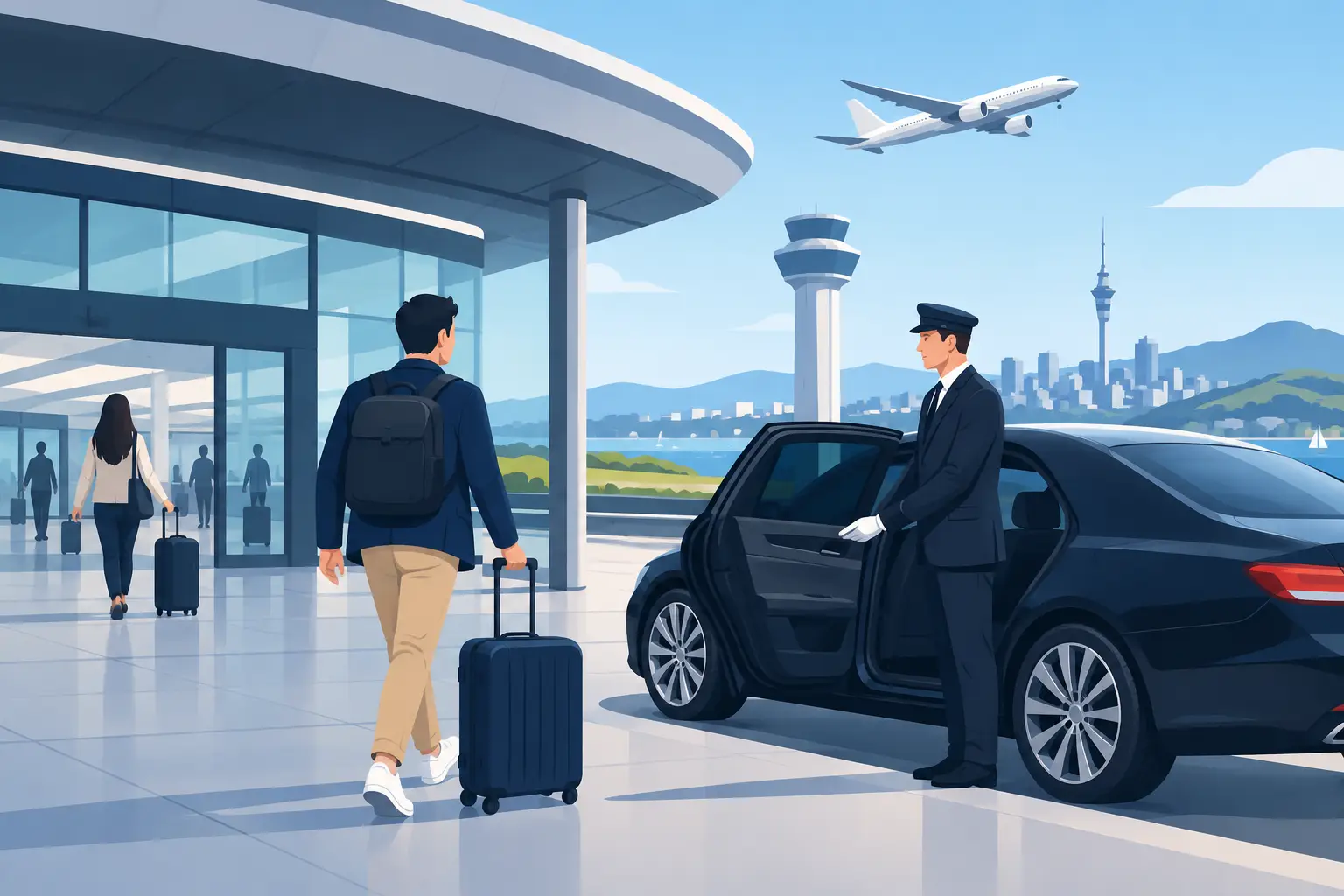
A long-haul arrival is rarely the moment to decipher transport options, manage tired children, locate colleagues or negotiate luggage trolleys. This Auckland airport arrival guide is designed to help you move from aircraft to your Auckland destination with a clear plan, whether you are arriving for a board meeting, a family holiday, a cruise departure or a tailored journey through New Zealand.
Auckland Airport is New Zealand's principal international gateway, and its arrival process is thorough for good reason. Allow time for border formalities, particularly if several international flights arrive close together. Once you have collected your luggage and cleared biosecurity, a pre-arranged private transfer means the next part of your journey is already in hand.
Before you land in Auckland
A little preparation makes the arrival hall feel considerably more straightforward. Keep your passport, arrival declaration and any supporting travel documents accessible before the aircraft begins its descent. New Zealand's border controls are strict, especially around food, plant material, animal products and outdoor equipment, so answer declaration questions carefully and honestly.
If you are travelling with hiking boots, camping equipment, golf clubs or other items used outdoors, clean them before departure and declare them if requested. Biosecurity officers may inspect or clean equipment on arrival. This is routine, but it can add time to your journey.
For travellers meeting a chauffeur, make sure the booking includes your flight number, mobile number and final destination. A professional transfer provider tracks the flight and plans collection around the expected arrival time, rather than asking you to guess when you will be through the terminal. It is also sensible to advise the provider of unusually large luggage, sporting equipment, a pram or a need for a child seat before travelling.
Auckland airport arrival guide: from aircraft to arrivals hall
International passengers generally pass through several stages after leaving the aircraft: immigration, baggage reclaim, customs and biosecurity. The order and timing can vary, but the process is easy to follow when you allow for each stage.
Immigration and passport control
Follow the signs for international arrivals and passport control. Eligible travellers may be able to use an automated eGate, while others will speak with a border officer. Keep your onward travel and accommodation details available in case they are required.
Waiting times depend on flight schedules, staffing and passenger volumes. Business travellers with a fixed meeting or families connecting to a domestic service should avoid scheduling onward commitments too tightly after the published landing time. The aircraft may arrive punctually, but disembarkation and border processing still take time.
Baggage reclaim
After immigration, check the display screens for your flight's baggage belt. Luggage can take longer than expected following a busy arrival period, so this is a useful moment to switch on your phone, review your transfer confirmation and let your party regroup.
If checked baggage is delayed or damaged, report it to your airline before leaving the baggage reclaim area. Keep receipts and reference numbers, and let your transport provider know if the delay becomes significant. For private chauffeur bookings, clear communication allows the collection plan to be adjusted calmly and professionally.
Customs and biosecurity
New Zealand protects its unique environment with some of the world's most comprehensive biosecurity requirements. Declare items when in doubt. Food, medicines, wooden products, souvenirs containing natural materials, used outdoor gear and animal products may need to be declared, inspected or surrendered.
The best approach is not to rush this stage. An incorrect declaration can lead to delays and penalties, while a careful declaration usually gives officers the information they need to process you efficiently. Once you have cleared the controlled area, you will enter the public arrivals space and can connect with your arranged transport.
Finding your private airport transfer
A pre-booked airport transfer removes the uncertainty of joining taxi queues, comparing vehicle sizes or finding room for every suitcase. Your chauffeur's collection instructions should identify the correct terminal area and the agreed meeting point. Because airport operating arrangements can change, use the directions supplied with your booking rather than relying on an old map or a previous visit.
For international arrivals, a meet-and-greet service is particularly valuable. Your driver can welcome you after you enter the public arrivals area, assist with luggage and escort you to the vehicle. This is a practical benefit for first-time visitors, executives travelling on a tight schedule, families with young children and guests arriving after a long flight.
At Brightlane, free Meet & Greet, flight-related waiting and a premium VIP fleet are designed around this exact point in the journey: the moment when passengers want the airport logistics handled for them. A Mercedes-Benz executive sedan suits individual travellers and couples, while a Mercedes V-Class offers comfortable capacity for families and small corporate groups. For larger parties, a Mercedes Sprinter minibus keeps colleagues, wedding guests or touring groups together.
Choosing the right vehicle for your arrival
The right transfer is not only about passenger numbers. It is also about luggage, privacy, itinerary and the standard of arrival you want to provide for guests.
An executive sedan is a strong choice for one or two passengers with standard luggage, especially for corporate travel, hotel transfers and VIP arrivals. It provides a quiet environment to make calls, review an itinerary or simply recover after an overnight flight.
Families and small groups often benefit from a people mover, even when a smaller vehicle appears sufficient on paper. Extra room matters when you have several large cases, pushchairs, child seats or carry-on bags. A private people mover also lets everyone travel together rather than splitting between vehicles.
For conference delegations, film crews, sporting teams or extended families, a minibus can be the most efficient option. It simplifies coordination, reduces the risk of people arriving separately and creates a more orderly start to an important programme. If your group has multiple flights, ask for a collection plan that reflects actual arrival times instead of assuming everyone will reach the kerb at once.
How long does it take to reach Auckland?
Journey times from Auckland Airport depend heavily on the time of day, road conditions and your destination. Central Auckland hotels are often reached in around 30 to 45 minutes, but peak traffic, major events and wet weather can extend that estimate. North Shore, East Auckland and western suburbs may require additional time, while journeys to Waiheke ferry terminals, cruise facilities or meeting venues should be planned around their own check-in requirements.
If you are heading beyond Auckland, build in a genuine recovery period after an international flight. A same-day private journey to Matamata, Rotorua, Waitomo or Taupo can be arranged, but it depends on your landing time, the length of border processing and how rested your group feels. For some travellers, an overnight stay in Auckland is the more comfortable choice before beginning a longer New Zealand itinerary.
Arriving for business, events or a cruise
For corporate visitors, the arrival transfer sets the tone for the whole visit. A chauffeur-driven vehicle provides privacy, reliable collection and a suitable setting for senior guests. Travel coordinators should share flight details, hotel addresses, passenger names and mobile contacts in advance, then confirm whether there are multiple stops or return requirements.
Event transport needs even more planning. Weddings, conferences, school balls and sporting fixtures often involve staggered arrivals, changing luggage needs and strict timings. A coordinated fleet plan is preferable to making separate bookings at the last minute. It gives organisers a single point of contact and helps ensure guests are collected in the right vehicles at the right time.
Cruise passengers should allow extra margin for terminal check-in and luggage drop-off. If you are arriving at Auckland Airport on the day of embarkation, book a private transfer with your ship's boarding deadline in mind, not only its advertised departure time.
Practical arrival details worth checking
Before departure, confirm your destination address, the number of passengers, luggage count and any special requests. Provide child-seat requirements in advance, and flag accessibility needs so the right vehicle can be allocated. If you intend to use onboard WiFi, need a stop for supplies or require a driver for several hours after collection, include this in the original booking.
Keep your phone charged and switch off aeroplane mode once permitted. International roaming can be expensive, but airport WiFi or an eSIM can help you receive messages while you wait for bags. If your flight is diverted, cancelled or substantially delayed, contact your transfer provider when you can, even if flight tracking is in place.
The most comfortable Auckland arrival begins before the wheels touch down: allow time for border formalities, book a vehicle that fits your party properly, and let a professional chauffeur take care of the road ahead.