
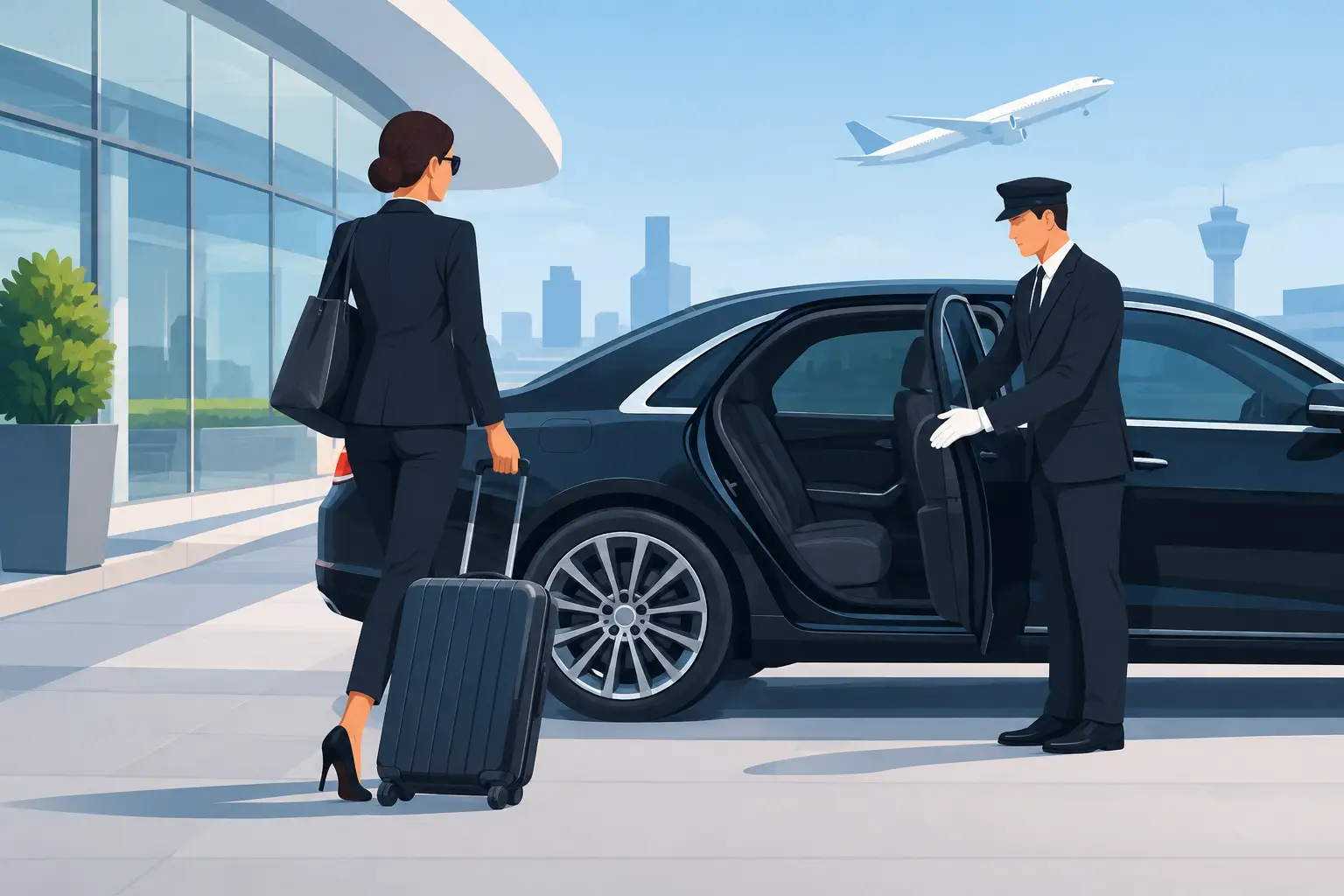
A delayed flight, a visiting board member and a conference schedule with no room for error are not the time to rely on an unplanned taxi queue. This corporate ground transport guide sets out how travel managers, executive assistants and event organisers can arrange private, dependable transport that protects both the timetable and the passenger experience.
For corporate travel, the vehicle is only one part of the service. The real requirement is journey management: accurate collection details, flight monitoring where needed, a professional chauffeur, suitable luggage capacity and a clear plan for every movement. Whether the itinerary starts at Auckland Airport, a central-city hotel, a cruise terminal or a private residence, the objective is the same - a calm, punctual arrival.
Start with the journey, not the vehicle
A corporate transport booking should begin with the passenger’s schedule and priorities. An executive travelling alone after an overnight international flight may need a quiet Mercedes-Benz sedan, airport Meet & Greet and direct transfer to a hotel. A leadership team travelling with presentation equipment may be better served by a Mercedes V-Class, which gives the group room to travel together without separating luggage across several cars.
For larger delegations, a Mercedes Sprinter minibus can keep a whole team on one timetable. This is often preferable to booking multiple taxis, particularly for airport arrivals, conferences, site visits and dinners where one late vehicle affects the entire programme. It also gives the organiser one point of contact and a clearer view of who is where.
The right choice depends on passenger numbers, luggage, mobility needs, privacy expectations and the amount of travel planned during the day. Do not select a vehicle by seat count alone. Four passengers with international luggage, for example, may require more space than six passengers travelling light between a hotel and venue.
Corporate ground transport guide: plan every handover
Most avoidable travel problems occur at handovers: when a passenger lands, leaves a meeting, checks out of a hotel or moves between an event and a dinner reservation. Each handover should have a named collection point, confirmed time, passenger contact number and clear instructions on who will meet whom.
At Auckland Airport, a pre-arranged Meet & Greet provides a more assured arrival than asking guests to find a rank or navigate an unfamiliar terminal. The chauffeur can meet the passenger after baggage collection and guide them to the waiting vehicle. For international guests, this removes a common point of friction after a long flight and gives them a professional welcome from the moment they arrive.
Flight schedules need practical judgement. A service built around flight-related waiting recognises that arrival time is not the same as kerbside readiness. Immigration, baggage collection and customs can vary widely, while domestic passengers may be ready much sooner. Provide flight numbers at the time of booking and update the transport provider promptly if the itinerary changes.
Hotel and port collections need the same care. Confirm the entrance to use, the collection time, the hotel name as it appears on the booking and any concierge arrangements. At busy city properties or cruise terminals, vague instructions such as ‘outside at nine’ can create unnecessary delays.
Build the booking around business priorities
Corporate travel is rarely just a transfer from A to B. It may include a client lunch, a series of meetings across Auckland, a venue inspection or a full-day regional itinerary. In these cases, hourly or full-day chauffeur hire can be more effective than arranging individual point-to-point trips.
A dedicated chauffeur and vehicle allow the day to adapt when meetings overrun or locations change. The passenger can leave documents and personal items in the vehicle, use onboard WiFi between appointments and avoid spending time arranging the next journey. The trade-off is that this option should be booked with a realistic schedule and clear waiting requirements, especially in high-demand periods.
For a straightforward airport departure, point-to-point travel is usually the more efficient choice. Build in adequate time for traffic, airport check-in requirements and any hotel collection delays. For VIPs, senior leaders and diplomatic guests, it is sensible to allow additional contingency rather than treating the itinerary as a best-case scenario.
Match service levels to the guest experience
The standard of transport reflects on the organisation arranging it. A clean, well-presented VIP vehicle, courteous chauffeur and prompt communication signal care and competence before a meeting has even begun. This matters when collecting clients, overseas investors, government guests, speakers and prospective partners.
Privacy is another consideration. Executives may need to make calls, prepare for meetings or simply decompress between appointments. Private chauffeur-driven travel offers a more suitable setting than shared transport, particularly when confidential discussions or sensitive schedules are involved.
Small details also carry weight. Onboard WiFi can help travellers reconnect after landing. Assistance with luggage removes pressure from guests who are unfamiliar with the area. A chauffeur who understands the itinerary can make the transition from airport to hotel or venue feel measured and well managed.
This is not about adding unnecessary formality to every journey. It is about selecting a service level that suits the importance of the passenger, the nature of the visit and the expectations attached to the occasion.
Coordinate group and event transport early
Conferences, awards dinners, sporting fixtures, film productions and corporate celebrations introduce a different set of logistics. The challenge is not simply vehicle capacity. It is moving people in the right sequence, allowing for venue access rules and ensuring no guest is left waiting after the event ends.
Start by mapping arrival and departure waves. Guests may arrive from several hotels, flights or offices, while departures can be staggered according to speeches, dinners or production call times. A single transport plan should identify passenger groups, collection locations, luggage needs, venue contacts and the person authorised to make changes on the day.
For larger groups, there is a balance between convenience and flexibility. One minibus keeps a group together, but it requires everyone to be ready at the same time. Several executive vehicles give more individual flexibility, but they need tighter coordination. The best arrangement depends on the event schedule and how much variation the programme can absorb.
Provide the transport provider with final manifests as early as possible, then nominate one organiser for last-minute amendments. Multiple people sending different instructions is a frequent cause of confusion. A capable provider will manage the driving and vehicle allocation; the organiser should retain clear ownership of guest movements and priorities.
Consider intercity travel as productive travel time
New Zealand corporate itineraries often extend beyond Auckland. Site visits, incentive programmes and executive retreats may include Hamilton, Rotorua, Taupō, Waitomo or other destinations. Private intercity transport offers a practical alternative to self-driving or coordinating several domestic flights, particularly when a group needs to travel together.
The value lies in control. Departure times can be matched to the programme, stops can be agreed in advance and passengers remain together throughout the journey. For executives, the travel time can also be used for conversation, preparation or rest rather than navigation and parking.
Longer journeys require sensible planning. Confirm the expected duration, comfort stops, meal arrangements, luggage volume and whether the vehicle will remain with the group at the destination. A day trip and a multi-day itinerary have different requirements, so make this clear from the outset.
Ask the questions that prevent disruption
Before confirming a corporate booking, establish the practical details that affect delivery. These include flight numbers, passenger names, mobile contacts, collection points, destination addresses, luggage, accessibility requirements and billing instructions. If a traveller is arriving from overseas, include a simple description of the Meet & Greet process so they know exactly what to expect.
It is also worth agreeing how changes will be handled. Flights are delayed, meetings move and guest numbers shift. A responsive transport partner should be able to receive updates quickly and advise on the best available adjustment. However, flexibility works best when changes are communicated early and through an agreed contact.
Brightlane provides private airport transfers, chauffeur hire, group transport and tailored New Zealand itineraries with a premium Mercedes-Benz fleet. For corporate organisers, that breadth means the same service standard can support a single VIP arrival, a full conference movement plan or an intercity executive programme.
The best corporate transport arrangement is often the one passengers barely have to think about. Give the journey the same attention as the meeting at its end, and every guest can arrive composed, on time and ready for what matters next.